Technology · Water to hydrogen

Hydrogen from wastewater

The INTEC SH PWT system turns almost any water source into green hydrogen. A physical-thermal process purifies the water first, then a thermo-electrolyser splits it into hydrogen and oxygen.

H2 purity, grade 5.0
99.999%
Lower production cost
up to 50%
Automated operation
24/7
CO2 in the process
0

The principle

No drinking water required.

Conventional electrolysers need carefully treated fresh water. In dry regions, that is exactly what is scarce. The PWT system (physical hydrogen technology) uses water that is already there as waste or in abundance.

Treatment is purely physical and thermal, with no chemicals. The output is deionised ultra-pure water that goes straight into electrolysis.

  • Municipal wastewater
  • Industrial wastewater
  • River water
  • Brackish water
  • Seawater
  • Slurry

Process

Three stages, one closed loop.

The plant reuses heat and gas flows from its own process. Surplus energy from one stage passes to the next.

  1. 01

    Purification

    Patented physical-thermal process. No chemicals, no membranes. The result is deionised ultra-pure water.

    Wastewater · Seawater · Slurry
  2. 02

    VD thermo-electrolysis

    A proprietary electrolyser splits the ultra-pure water into hydrogen and oxygen. No electrode cleaning, no membrane replacement.

    H₂ 5.0 · O₂ by-product
  3. 03

    Compression and bottling

    Hydrogen is delivered at 5 bar. A compressor station to 230 bar and cylinder bottling are available on request.

    5 bar · 230 bar

Technical data

Standard plants from 1,000 to 10,000 litres per hour.

Plant typePWT 1000PWT 2000PWT 5000PWT 10000
Water input1,000 l/h · 8,640 m³ p.a.2,000 l/h · 17,280 m³ p.a.5,000 l/h · 43,200 m³ p.a.10,000 l/h · 86,400 m³ p.a.
Hydrogen (5.0)about 77 kg/h · 665 t p.a.154 kg/h · 1,330 t p.a.385 kg/h · 3,326 t p.a.770 kg/h · 6,653 t p.a.
Rated power3 MW · 25,920 MWh p.a.6 MW · 51,840 MWh p.a.15 MW · 129,600 MWh p.a.30 MW · 259,200 MWh p.a.
Footprint2 × 40 ft containers2 to 3 × 40 ft containers6 × 40 ft containers12 × 40 ft containers
Weight10 t10 to 15 t30 t60 t
Staff per shift2 technicians2 technicians3 technicians4 technicians

Manufacturer data, INTEC Energies GmbH. Based on 8,640 operating hours per year. Output: hydrogen 5.0 (99.999%) at 5 bar or 230 bar. Electrical connection 380 V, three-phase. The whole plant is mounted on metal frames sized to 40 ft containers.

Operation

Produce locally, ship short distances.

The plants are modular and grow with demand. Because they ship in container dimensions, they can stand where the water is and where the hydrogen is needed. That cuts transport distances and emissions.

Operation is fully automated around the clock. Two to four trained technicians per shift are enough. Oxygen comes out as a second product that can be sold.

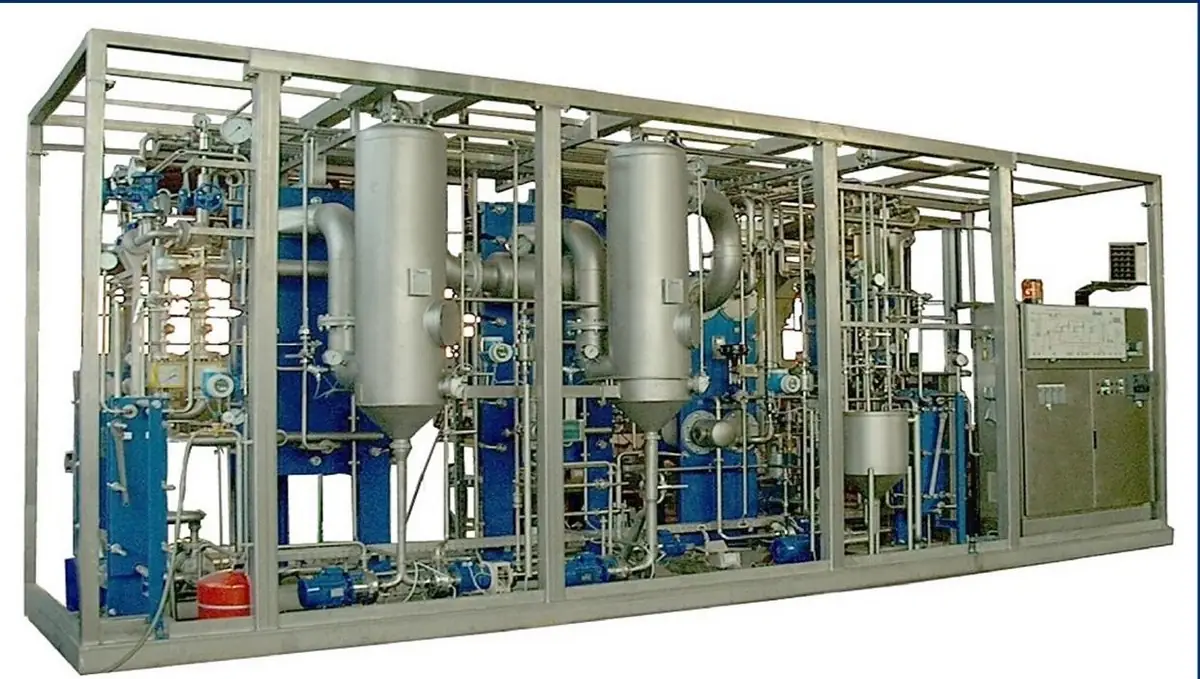
Compact PWT treatment unit on a steel frame

Technology partners

Who stands behind the process.

Berlin

INTEC Energies GmbH

Owner of the INTEC SH PWT technology. Gold medal at the EUREKA World Exhibition for Inventions, Research and New Technologies. Patents on water treatment and VD electrolysis.

intec-energies.com (external link, opens in new tab)

Strategic alliance with ITC
Darmstadt · since 1990

EUROSyn GmbH

Technology owner and manufacturer for thermal water treatment, membrane-free desalination and hydrogen. More than 35 years of development, own production sites in Karlsruhe and in southern Germany and Switzerland.

> 80% H2 efficiencyFirst H2 engine in everyday use, 2008

Questions

Common questions about hydrogen.

What water can the system use?

Municipal and industrial wastewater, river, brackish and seawater, and slurry. Drinking water is not needed.

How pure is the hydrogen?

Better than grade 5.0, so at least 99.999%. That is enough for fuel cells and industrial use.

How big are the plants?

The standard types process 1,000 to 10,000 litres of water per hour and take up 2 to 12 units in 40 ft container size. Several units can be combined.

Where does the power come from?

From the grid or from renewable sources on site. Paired with the Hassabou PV-T collector, one plant supplies electricity and heat for electrolysis from the same surface.

Does the process emit CO2?

No. Besides hydrogen, it produces oxygen as a by-product.

The river Spree in Berlin-Moabit at blue hour

Contact

Planning an energy project in MENA or the Gulf?

Tell us about the site, the demand and the timeline. We'll come back with the right technology mix and the right partners.

Start a conversation

ITC GmbH, Berlin

Address
Alt-Moabit 2
10557 Berlin
Fax
+49 30 20888 1176